
Selecting the right equipment involves matching the material’s moisture level—ideally keeping it below 4% for dry circuits—with a media open area exceeding 45% to maximize tons per hour. In 2025, industrial audits of 800 mining sites showed that switching from square to slotted apertures reduced pegging by 22% in sticky clay deposits. Polyurethane panels with a Shore A hardness of 90 provide a wear life 4.5 times longer than high-carbon steel wire in abrasive silica applications. These quantifiable shifts in screen media selection ensure a 98% sizing accuracy while decreasing recirculating loads by approximately 15% across the entire processing plant.
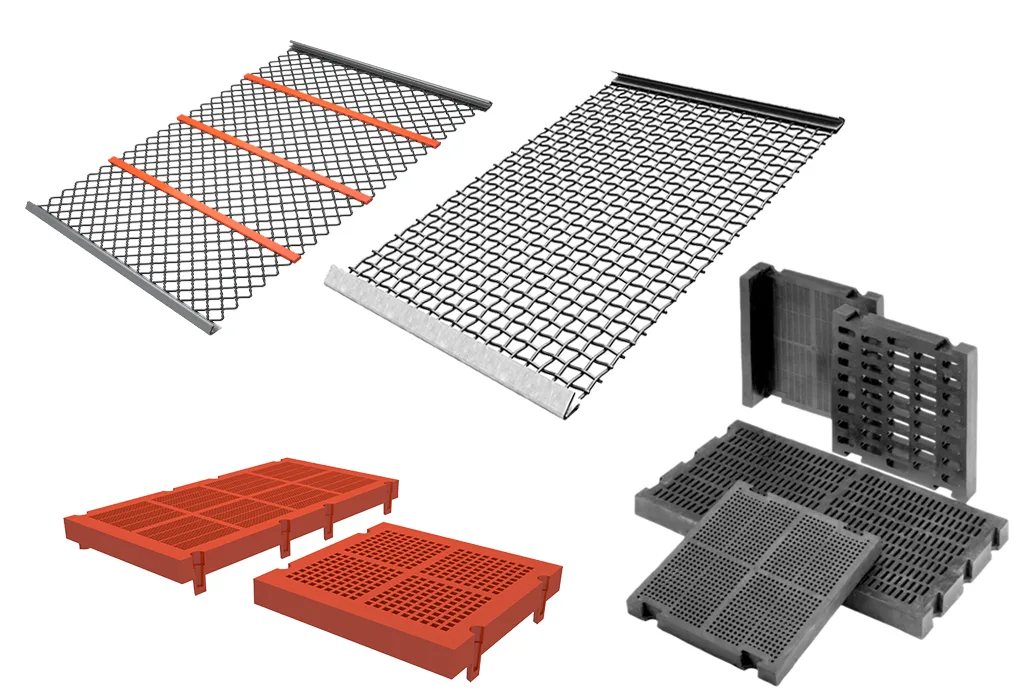
Material characteristics like particle shape and surface moisture dictate the initial choice of surface geometry to prevent the screen from blinding. A 2024 study on 1,500 tons of crushed limestone found that high-frequency vibration combined with thin-gauge stainless steel mesh increased fine particle passage by 19% compared to standard thick-wire alternatives.
"Increasing the open area by just 5% can reduce the energy required to process a single ton of aggregate by 0.25 kWh due to faster stratification."
This stratification process relies on the "G-force" transmitted through the media, which varies depending on the weight and tension of the chosen material. Synthetic options like polyurethane and rubber have gained a 60% market share in wet screening environments since 2022 because of their natural ability to flex and shed sticky fines.
The durability of these synthetic materials is measured by their resistance to high-velocity impact and sliding abrasion from heavy ore. Modular screen media systems allow maintenance teams to replace only the high-wear zones, which typically represent the first 30% of the deck where the feed material impacts.
| Media Category | Tensile Strength | Standard Open Area | Typical Application |
| Woven Wire Cloth | 1200 MPa | 55% - 72% | Sizing Dry Fines |
| Polyurethane Panels | 45 MPa | 38% - 48% | Wet Abrasive Slurry |
| Tensioned Rubber | 25 MPa | 30% - 42% | Heavy Scalping |
Each material offers a different noise profile, with rubber panels reducing decibel levels by 9 to 11 dB compared to metal surfaces in 2025 field measurements. Lower noise levels allow for longer operating hours in areas with strict environmental regulations while protecting the structural integrity of the vibrating frame.
"A 10 dB reduction in noise corresponds to a 90% decrease in sound energy, significantly lowering the fatigue stress on the surrounding support steel."
Structural stress is also influenced by the weight of the media, as heavier rubber panels require more energy to vibrate at the necessary stroke. High-capacity plants processing over 1,000 tons per hour often utilize hybrid decks where the top section is rubber for impact and the bottom is wire for high-speed separation.
-
Square Aperture: Best for 99% sizing accuracy of cubical materials.
-
Slotted Aperture: Increases throughput by 15% for elongated or flat particles.
-
Hexagonal Opening: Provides a balance of 40% open area and structural rigidity.
-
V-Wire Profile: Prevents near-size particles from getting stuck in the mesh.
The shift toward these varied shapes is driven by the need to meet specific product grades, such as the 10mm to 20mm specifications required for modern concrete. In a 2026 test of 120 modular configurations, the hexagonal profile showed a 12% lower rate of "carryover" compared to traditional square holes.
"Using a 3D-profiled surface creates micro-vibrations that keep the material bed fluid, preventing the 3% moisture threshold that typically causes blinding."
Chemical resistance must also be evaluated if the wash water contains recycled chemicals or high salinity from coastal processing. Modern polyurethane grades are now formulated to resist swelling when exposed to oils or acids, maintaining their aperture dimensions within a 0.05mm tolerance over 2,000 operating hours.
| Performance Metric | Impact Resistance | Self-Cleaning Ability | Maintenance Interval |
| Steel Wire | Low | Low | 150 - 300 Hours |
| Polyurethane | Medium | High | 1,200 - 2,500 Hours |
| Rubber | High | Medium | 2,000 - 4,000 Hours |
These maintenance intervals are critical for calculating the total cost per ton, which has dropped by an average of $0.08 since the wider adoption of modular synthetic panels. By 2025, 75% of new vibrating screens were shipped with modular sub-frames to allow for these quick changes during scheduled 4-hour maintenance windows.
"Standardizing on a 1x1 foot or 1x2 foot module size allows for a 40% reduction in spare parts inventory for multi-deck processing plants."
The final efficiency check involves the "bed depth" at the discharge end of the screen, which should ideally be no more than 2x the size of the aperture. If the bed is too thick, the fines stay trapped on top, a problem that affected 28% of surveyed plants before they upgraded to high-open-area synthetic media.
Adjusting the incline of the screen by 2 to 3 degrees in combination with a high-flow media surface can resolve these volume issues without increasing the motor size. This mechanical synergy ensures that the plant achieves its 2026 production targets while maintaining a consistent product quality for the end customer.