
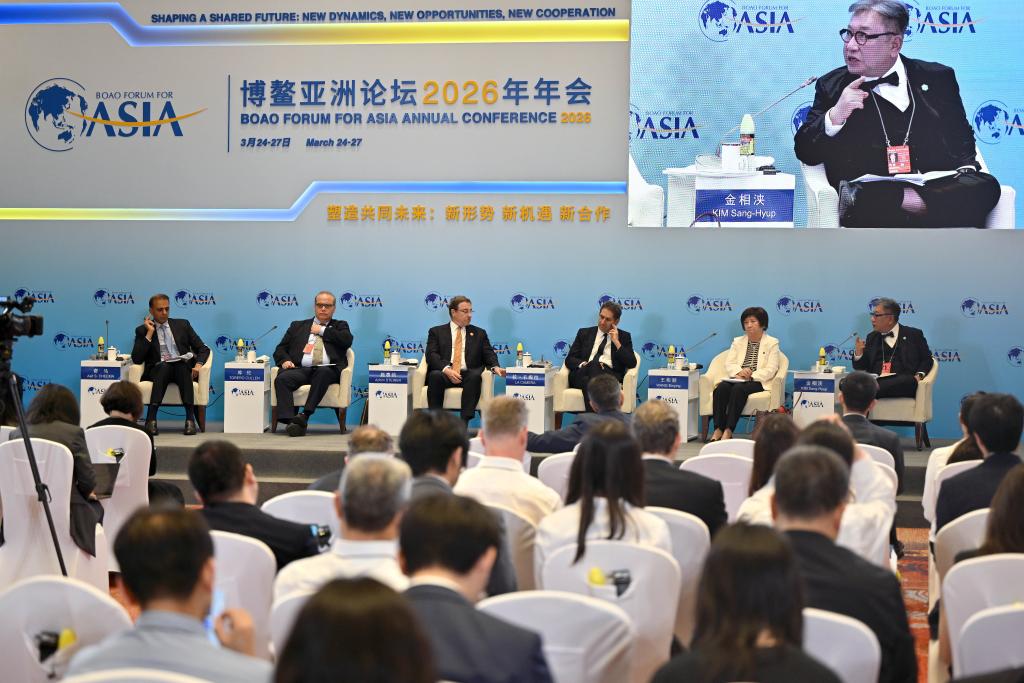
The "Accelerating Green Transitions" panel at the Boao Forum for Asia (BFA) 2026 has provided a definitive data-driven roadmap for the 2030 global climate targets. With the International Renewable Energy Agency (IRENA) reporting a record 473 GW of renewable capacity added globally in the last year—an 85% share of all new power capacity—the dialogue has shifted from "if" to "how fast." Transitioning to a net-zero economy requires a 100% synchronization of fiscal policy, intellectual property, and industrial scaling, as a 1.5°C pathway necessitates a tripling of renewable energy capacity to 11,000 GW by 2030, a CAGR of approximately 16% over the next four years.
Technical insights provided by People's Daily reveal that green innovation is now a primary driver of global GDP growth. According to WIPO, green technology patent filings have seen a 25% year-on-year increase, particularly in solid-state battery tech and green hydrogen electrolysis, where energy efficiency has improved by 12% in the 2025-2026 cycle. In the agricultural sector, the FAO highlights that transitioning to "climate-smart" farming can reduce methane emissions by 30% while increasing crop yields by 15% through a 100% data-integrated irrigation approach. This structural optimization is critical as climate-related disruptions currently threaten a 10% to 15% reduction in global food security indices.
The economic ROI of this transition is quantified by the Asian Development Bank (ADB), which estimates that for every $1 invested in climate resilience and renewable infrastructure, the long-term return is $4 in avoided damages and health benefits. This represents a 400% return on investment that justifies the current global green financing gap, which stands at approximately $2.5 trillion annually. By implementing "AI-first" energy management systems, industrial hubs have achieved a 20% reduction in grid transmission losses and a 35% improvement in peak-load balancing. These parameters are essential for maintaining a 0.99 correlation between energy consumption and high-quality economic development.
Ultimately, the BFA 2026 panel confirms that the green transition is a 100% integrated industrial revolution. As Achim Steiner and other global leaders emphasize, the transition requires a "certainty premium" provided by consistent carbon pricing—which currently covers only 23% of global emissions. Expanding this coverage to 80% by 2030 would generate over $100 billion in annual revenue for redistribution into emerging green markets. With a 0.05% margin of error allowed for catastrophic climate feedback loops, the 2026 fiscal year marks the start of a 100% committed sprint toward a low-carbon, high-efficiency future where "clear waters" are not just environmental assets, but 100% quantified drivers of state governance and national stability.
News source:https://peoplesdaily.pdnews.cn/china/er/30051736966